

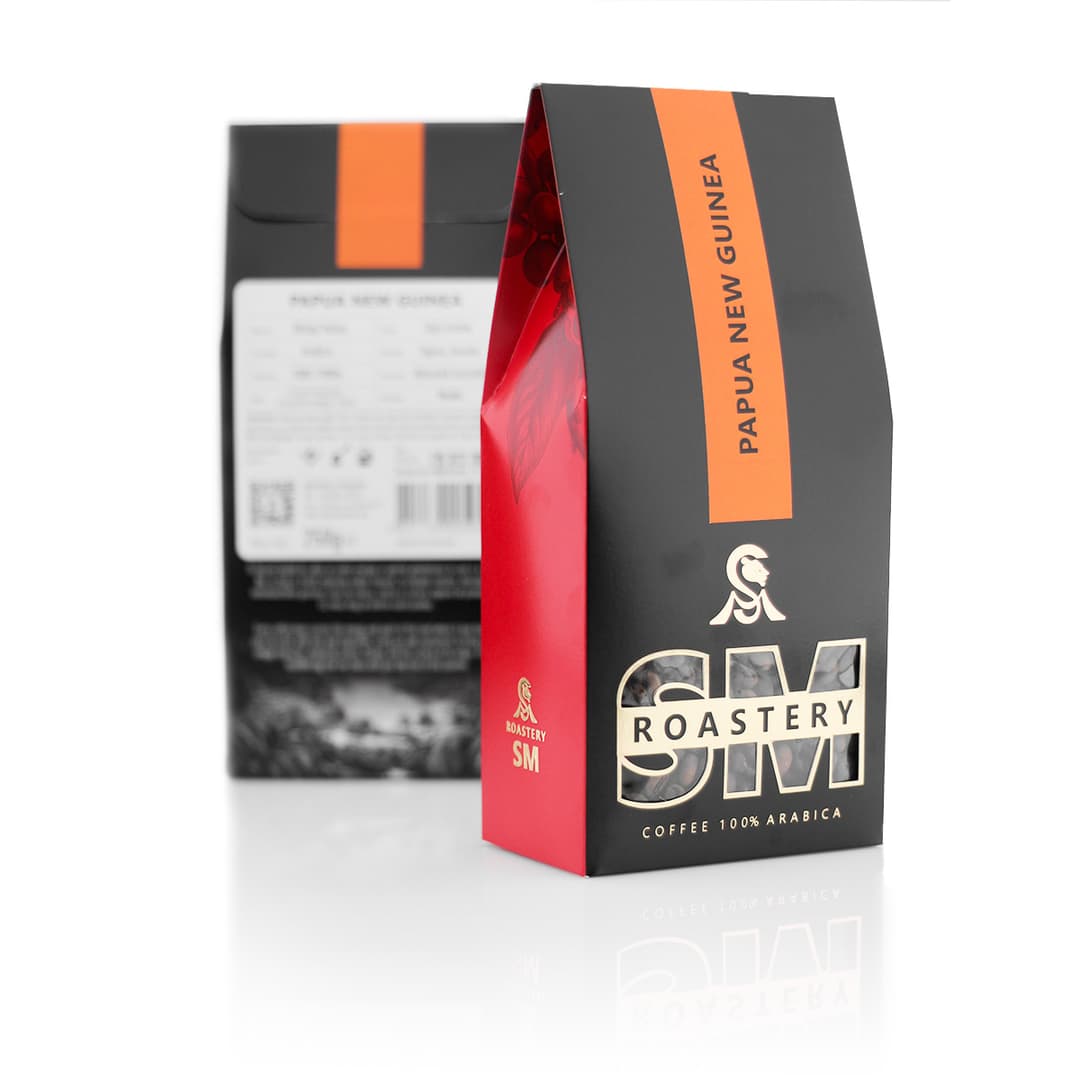
What comes to mind when you think of Papua New Guinea? Most likely not much, because this remote country remains one of the least discovered. Located north of Australia’s tip and marking the eastern border of the Pacific Ocean, it amazes with its cultural diversity. More than 850 languages exist in this region. Papua New Guinea is also one of the most rural countries in the world. Scientists believe it may still be home to many undiscovered plants, animals and Indigenous communities hidden in its lush jungles. All these are good reasons to pay more attention to coffees from this wild and fascinating country.
Coffee is a relatively new guest in Papua New Guinea, as commercial production began only in 1926/1927, when the first Jamaica Blue Mountain seeds were planted. Around 70% of production comes from small farmers who own small plots, sometimes with as few as 20 coffee trees, in so-called coffee gardens alongside subsistence crops. The country is generally dominated by fragmented mountain ranges, steep valleys and hard-to-access plateaus.
Because many farmers live in isolated areas, their coffee must be collected by plane from grass airstrips or, for those with road access, transported by truck to the nearest town, often with great difficulty. A typical village grower in Papua New Guinea usually does not use synthetic fertilizers or chemical pesticides. Fallen shade-tree leaves, together with the husk and pulp from freshly processed coffee, create a natural and nutritious mulch.
To process coffee, farmers use either a small manual pulper or bring cherries to central washing stations. Larger farms such as Sigri Estate and the neighboring Kigabah plantation are also part of Papua New Guinea’s fascinating coffee culture. In general, coffees from Papua New Guinea stand out for captivating complexity that carries you across the flavor wheel.